If you’ve just launched a new website, you’re probably obsessing over your homepage, your service pages, and whether your keywords are in the right places. I get it. I’ve worked with loads of new businesses who thought on-page SEO was enough to rank their new site.
But without off-page SEO, Google has no reason to trust you.
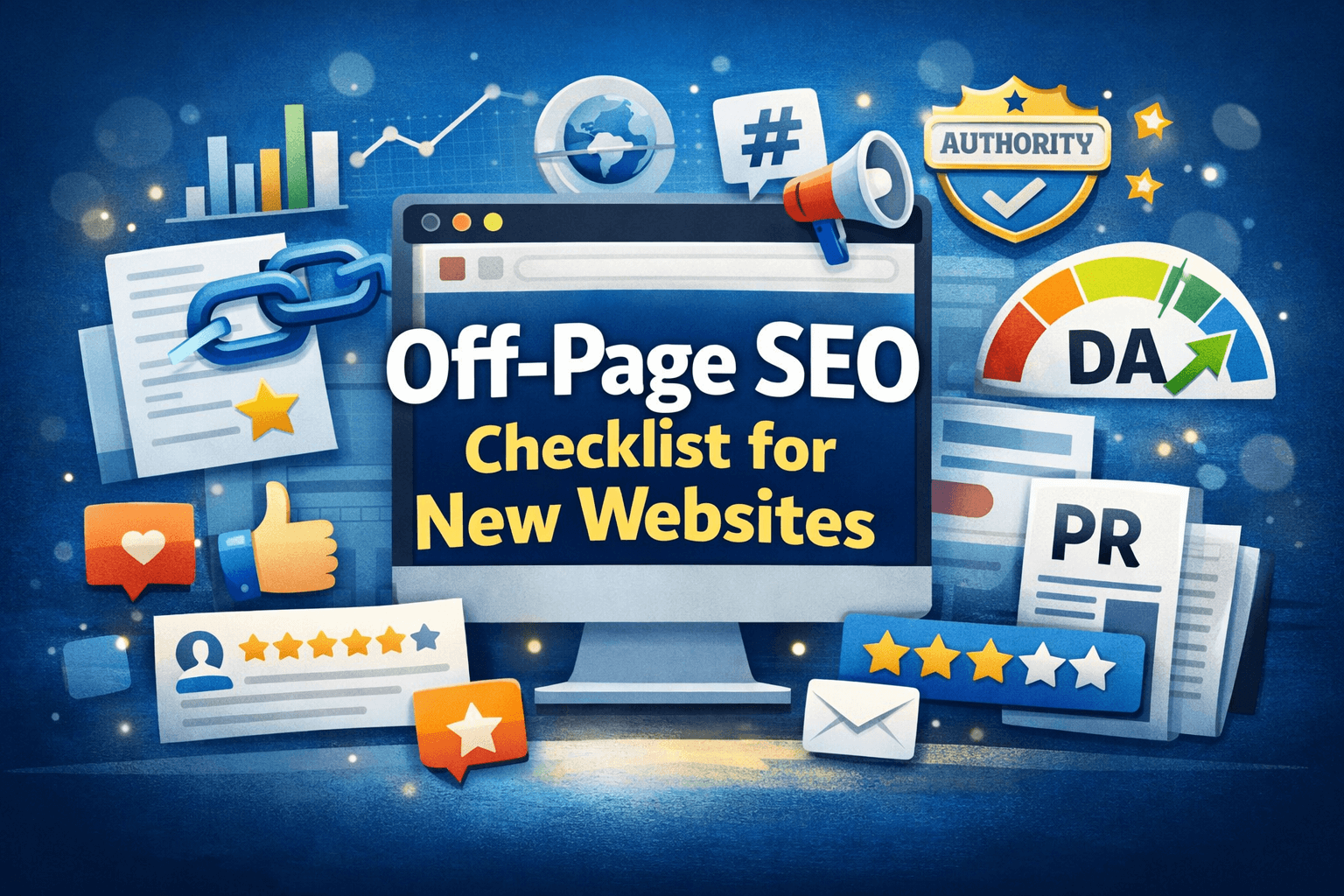
Off-page SEO is what builds your website authority, improves your search engine rankings, and shows Google that real people and real websites value your content. In this guide, I’ll walk you through a practical off-page SEO checklist for new websites based on what actually works in real campaigns.
What Is Off-Page SEO and Why It Matters for New Websites
Off-page SEO refers to everything that happens outside your website to improve your organic traffic and visibility in search engines.
This includes backlinks, brand mentions, digital PR, social signals, local citations, and online reviews. It’s about reputation, not just optimisation.
When I launch a new SEO campaign, the biggest hurdle is domain authority. A new website has no trust signals, no referring domains, and no link profile. Google’s algorithm looks at external signals like link building and anchor text distribution to decide whether you’re credible.
Without those signals, even perfectly optimised content can sit on page three.
Build Foundational Backlinks First
The first step in any off-page SEO checklist for a new website is building foundational backlinks.
These aren’t high domain authority or news article links. They’re simple, trustworthy links that create a natural backlink profile.
Start with business directories and citations. Make sure your name, address and phone number are consistent across platforms. This strengthens your local SEO and helps Google verify your business entity.
Then look at industry directories and niche relevant platforms. A relevant backlink from a trusted directory is far more valuable than a random link from an unrelated blog.
I always recommend focusing on relevance over volume. One contextual backlink from a niche site can outperform ten low-quality links.
Focus on Quality Link Building Strategies
Once your foundation is in place, you need a proper link building strategy.
Guest Posting
Guest posting is still one of the most effective methods when done properly. Reach out to websites in your industry and offer valuable content in exchange for a contextual backlink.
Make sure to avoid spammy outreach templates. Website owners can spot them instantly.
Digital PR
Digital PR is another powerful tactic, but is usually only thought about when your initial domain authority has been established.
If you can create original research, industry insights, or data-driven content, journalists and bloggers are far more likely to link to you.
Broken Link Building
Broken link building also works well for new websites. Find broken external links on relevant blogs and suggest your content as a replacement. It’s simple but effective when your content genuinely fits.
Optimise Anchor Text and Link Profile
Anchor text matters more than most people realise.
If every backlink uses your exact match keyword, it looks unnatural. Google’s algorithm can detect manipulation very easily.
You want a natural mix of branded anchor text, generic terms, and partial match keywords. You also don’t want all your backlinks pointing to the same page. A healthy link profile shows diversity across referring domains, anchor text types, and link placements.
When I audit new websites, over optimised anchor text is one of the most common issues I see.
Keep it natural. Build links slowly. Focus on long-term growth rather than shortcuts.

Leverage Social Media and Brand Signals
Social media marketing doesn’t directly impact rankings in a traditional sense, but it does amplify your content.
When your blog posts are shared, mentioned, and engaged with, you increase the likelihood of earning natural backlinks. That’s where the real value lies – when you don’t have to work to gain links!
Brand mentions, even without a hyperlink, act as entity signals. Google understands when your brand is being talked about across platforms.
For new websites, building brand awareness early makes link acquisition much easier later on, as people trust your brand.
Strengthen E-E-A-T With Authority Signals
Google’s E-E-A-T framework focuses on experience, expertise, authority and trust.
Off-page SEO is actually the best way to build authority for your new website.
Secure Trust with Users and Google
Encourage reviews. Get testimonials published on third-party platforms. Secure mentions on reputable industry websites. These trust signals improve both user confidence and search visibility.
Monitor Your Off-Page SEO Performance
You can’t improve what you don’t measure.
Use tools like Google Search Console to monitor external links and referring domains. Track domain authority trends and watch for toxic backlinks.
Competitor analysis is also important. Identify where competitors are earning links and look for similar opportunities.
Off-page SEO is an ongoing process of building reputation and maintaining credibility.
Build Authority Before You Expect Rankings
Launching a new website is exciting. But without off-page SEO, you’re pretty much invisible in competitive search results.
This off-page SEO checklist for new websites gives you a practical roadmap. Start with foundational backlinks. Focus on quality link building. Optimise your anchor text. Build brand signals. Strengthen authority. Measure everything.
If you’re building a new website and want to accelerate your organic growth properly, take the time to get off-page SEO right from the start. Your future rankings depend on it.